Honestly the Star Wars fandom needs to always acknowledge and never forget that time Leia got so fed up and lost all fucks to give about people gossiping and talking shit about her after the galaxy-wide reveal of her biological father that she showed up to a society party in all black with a matching cape, ready to stunt and give folks something to talk about, like
“The only way to get through it, she decided, was through a little dark humor of her own–which took the form of the long black dress she wore, cape and all.
If they only wanted to see her as Vader’s daughter from now on, why not look the part?” –Claudia Gray, Bloodline
Excuse me, what??? The levels of pure, unmitigated, “who gon’ check me?” EXTRA™ and give-no-fuckedness!! How can you not stan??? That is a truly iconic moment in Star Wars canon right there. Also, Senator Organa was doing Vader cosplay way before her son picked it up. #Facts
This needs indeed to be acknowledged!
I’m really, really glad the new EU is addressing this. Leia not really reacting to the reveal that Vader is her biological father was a major writing flaw to me.
In the ST you can actually see that all of the bullshit she’s been through has affected her.
Since childhood, Ariel has been among my favorite Disney princesses. I connect with her deeply – and whenever someone (like Keira Knightley recently) brings up the old line that she is a ‘bad role model’ for young girls because she ‘gives up her voice for a man,’ my heart breaks.
That reading of Ariel’s character is reductive and inaccurate.
Everyone always mentions that Ariel was interested in the human world before meeting Eric, but not as many people point out how radical that makes her in the context of her own society.
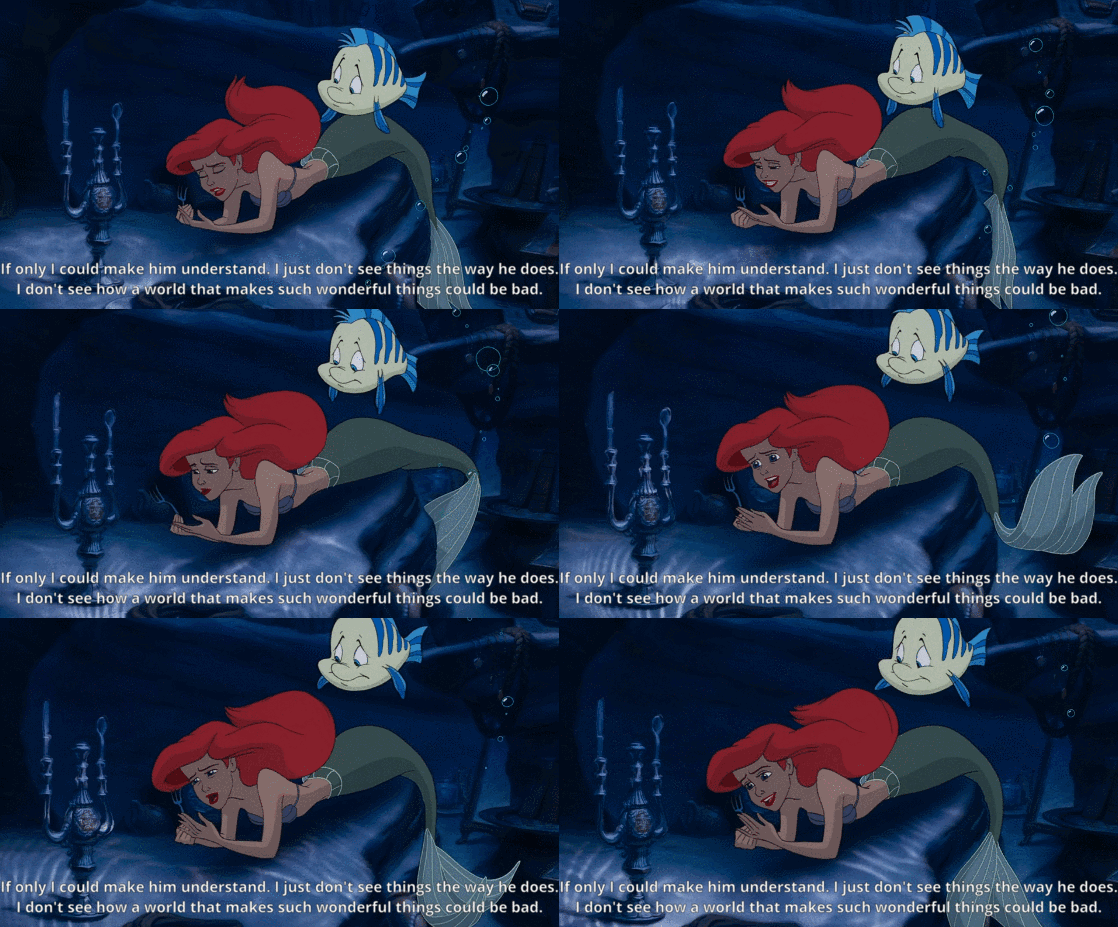
Ariel lives in a society that is xenophobic towards humans, Triton at various points calls them “barbarians,” “savage,” and “incapable of any real feeling.” She lives in a society that constantly tells her that her interest in the human world is wrong and bad, something she struggles with at the start of Part of Your World:
By seeking a fuller understanding of the human world, Ariel actively challenges her father’s xenophobia, thinking for herself instead of accepting her society’s fears and prejudices.
The film goes out of its way to establish Ariel as an outsider within her own society. Think for a moment about the opening lines of Part of Your World:
Look at this stuff. Isn’t it neat? Wouldn’t you think my collection’s complete? Wouldn’t you think I’m the girl The girl who has everything? Look at this trove, Treasures untold How many wonders can one cavern hold? Lookin’ around here you’d think Sure, she’s got everything…
People who criticize Ariel so often mis-characterize her as simply a spoiled teenager. The very statement, “She gave up her voice for a man!” implies she’s a foolish girl who throws her life and agency away in a fit of pique.
Yet, the opening of Part of Your Worldanticipates that certain members of the audience will have a superficial understanding of Ariel’s pain and directly addresses that. On a superficial level, Ariel does seem like “the girl who has everything.” She is the daughter of the most important merman in Atlantica, she has countless treasures hidden away in her grotto…
But that’s the thing, you see. They’re hidden in her grotto. Ariel may be the daughter of the sea-king, but the sea-king hates and fears humanity. Part of Your World is the most heartbreaking rebuttal to anyone who sees Ariel as a shallow teenager because it shows how alone she truly is. Except for Flounder, she has no one under the sea she can genuinely confide in. (She confides in Sebastian, of course, but he was sent by her father to spy on her and he does betray her trust
– by mistake, but he does). Her sisters and the rest of Atlantica presumably do not question the prejudices that cause the human world to be forbidden to the sea folk.
Ariel is an outcast, forced to hide who she is from the people who should love her unconditionally.
The more Part of Your World goes on, the more devastating and resonant Ariel’s collection of artifacts becomes.
These artifacts represent a void in her life and, at the same time, are the only means she has of filling that void.
She longs to have knowledge, but her society imposes ignorance on her. She longs to see the human world herself, to ask questions and finally be answered – but it is all denied her. The imposed ignorance forces her to live vicariously through the artifacts she collects.
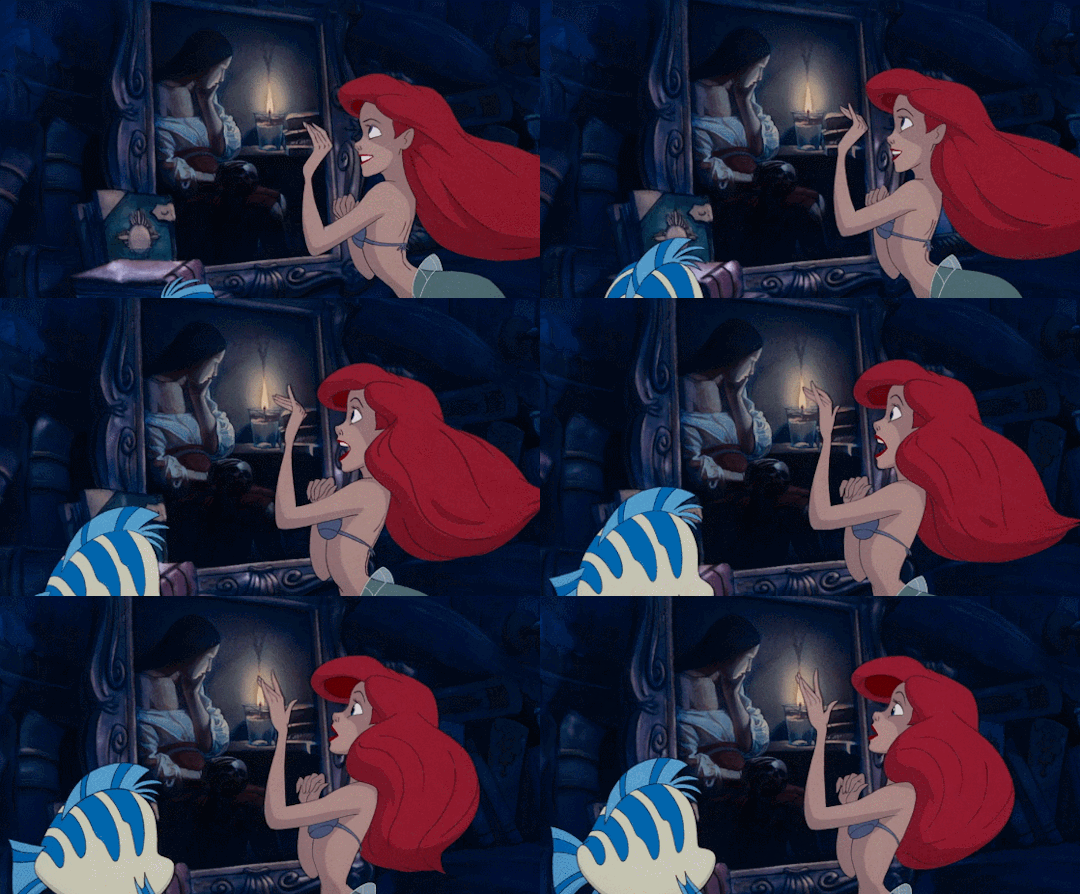
She cannot see a couple dancing, so she must content herself with a music box.
She can only experience the shadow of fire on oil and canvas.
Her collection perpetually reminds her that there is a world beyond her reach. At the same time, it is her central way of interacting with that world. Yes, she can go up to to the surface and talk to Scuttle, but her collection is something so much more personal. These are items she saved from the ruins of ships, sometimes at the risk of her own life… so she could study them, learn from them, and lament the unjust rules of her society that prevent her from learning more…
Her courage, her curiosity, her thirst for knowledge are all bound up in these precious possessions.
And yes, they are objects. Yes, she wants more than a collection of objects. But this collection is all she has. And, as far as Ariel knows, it is all she will ever have…
When you’re all but alone in the world and you have only meager scraps to cling to, those scraps mean the world to you.
And, I remind you, Ariel cannot even openly enjoy her collection of scraps, the shadows of a world she cannot touch. She has to hide even them, guard them, keep them secret.
Ariel’s grotto is a place of solace and security where she can be herself without fear of judgment.
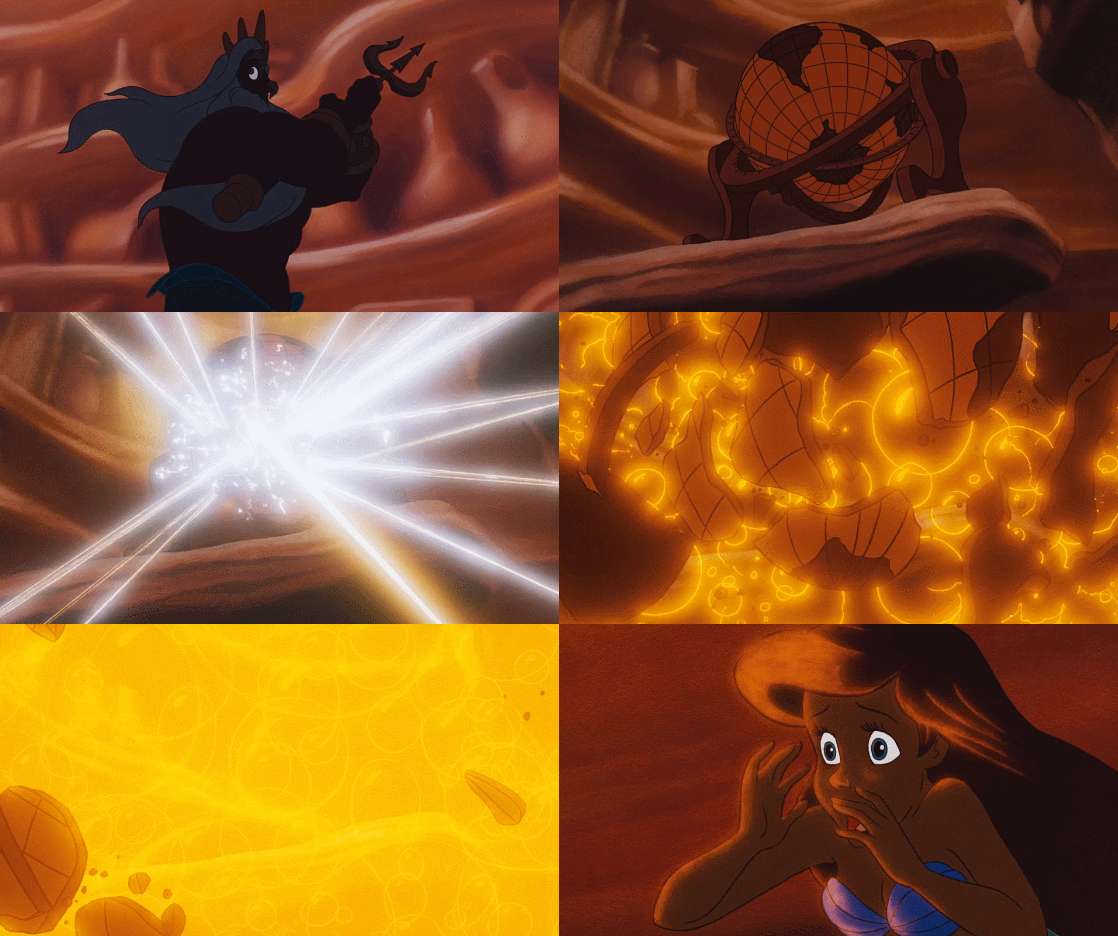
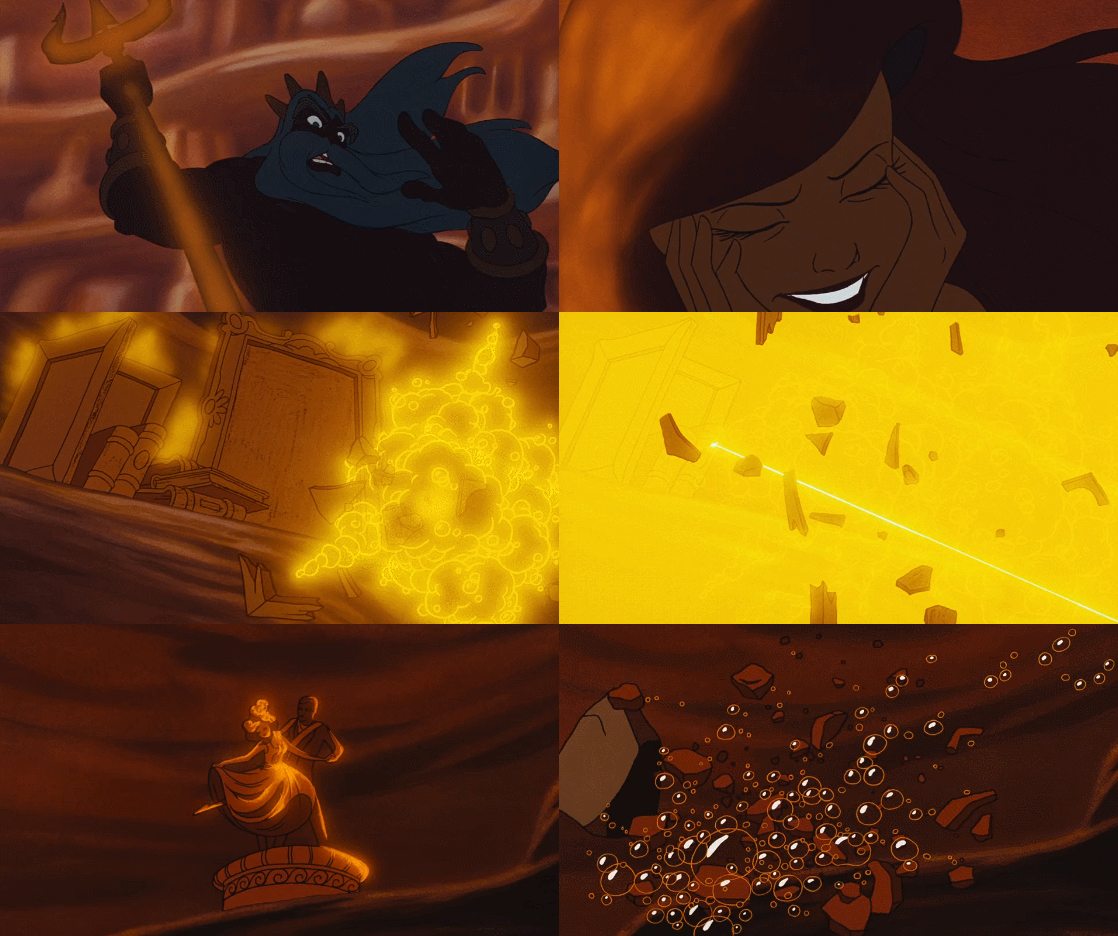
There is a reason the destruction of Ariel’s grotto harrowed me more as a child than any other scene in a Disney film. I could hardly watch it. I hid my face. I begged my family to skip scene. I was reduced to a sobbing mess. On a personal level, it harrowed me more than the destruction of Cinderella’s dress.
That reason is because, in watching the scene, I felt the pain of a place of refuge being invaded.
By the time we reach the destruction of the grotto, we are as emotionally invested in Ariel’s collection as she is because we see that the objects are more than objects. They are extensions of herself, encapsulating all her feelings of hope and hopelessness.
Destroying those items is like annihilating a part of her soul.
That is why I hate the “she gave up her voice for a man” line of thought so much. Because it so blatantly disregards the context of the film. Because it paints Ariel as a shallow teenager. Because it places blame for what follows solely on Ariel’s shoulders and absolves Triton of any wrongdoing.
I want to tread carefully here because, like Ariel, Triton is a nuanced and complex character. He has good intentions and cares about his youngest daughter.
Yet, even a well-intentioned individual can be in the wrong. Even an individual who is right about certain things (Ariel is indeed impetuous and reckless at times – though I hope my analysis reminds readers that those are not her sole character traits), can be wrong about other things.
And Triton’s confrontation with Ariel highlights his failings and his faults.
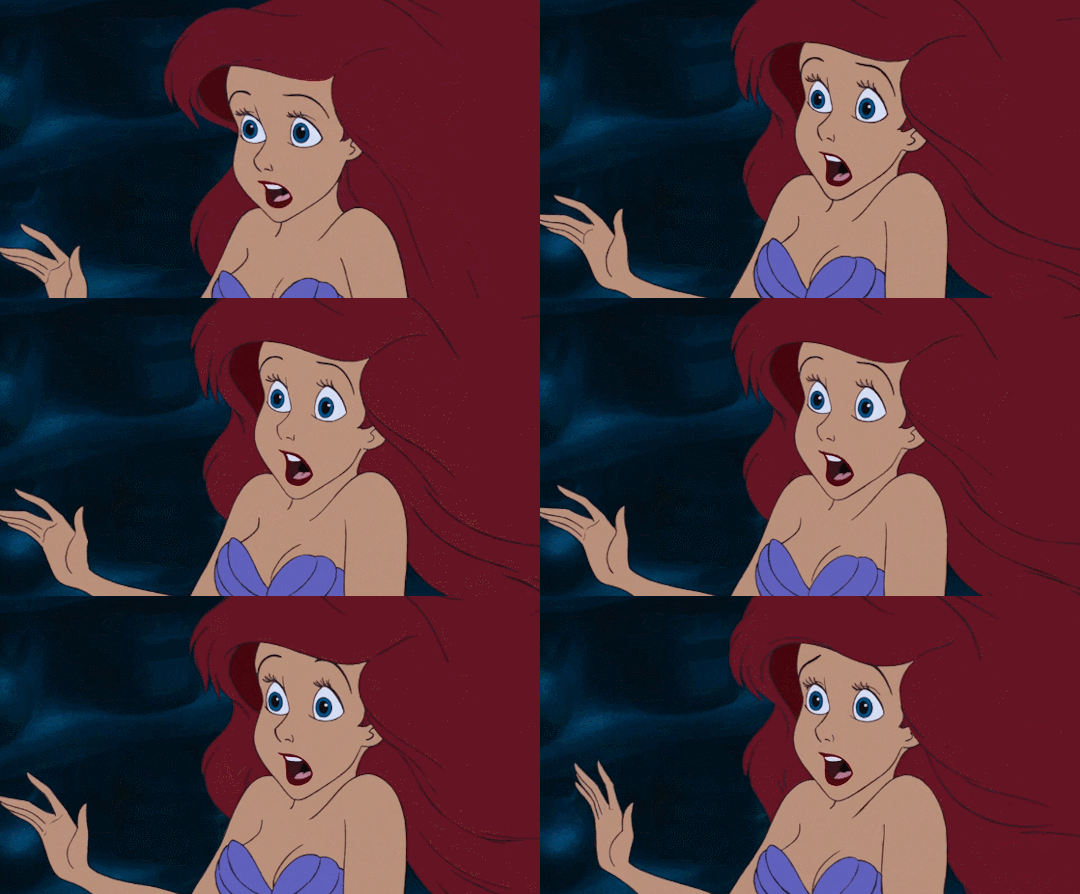
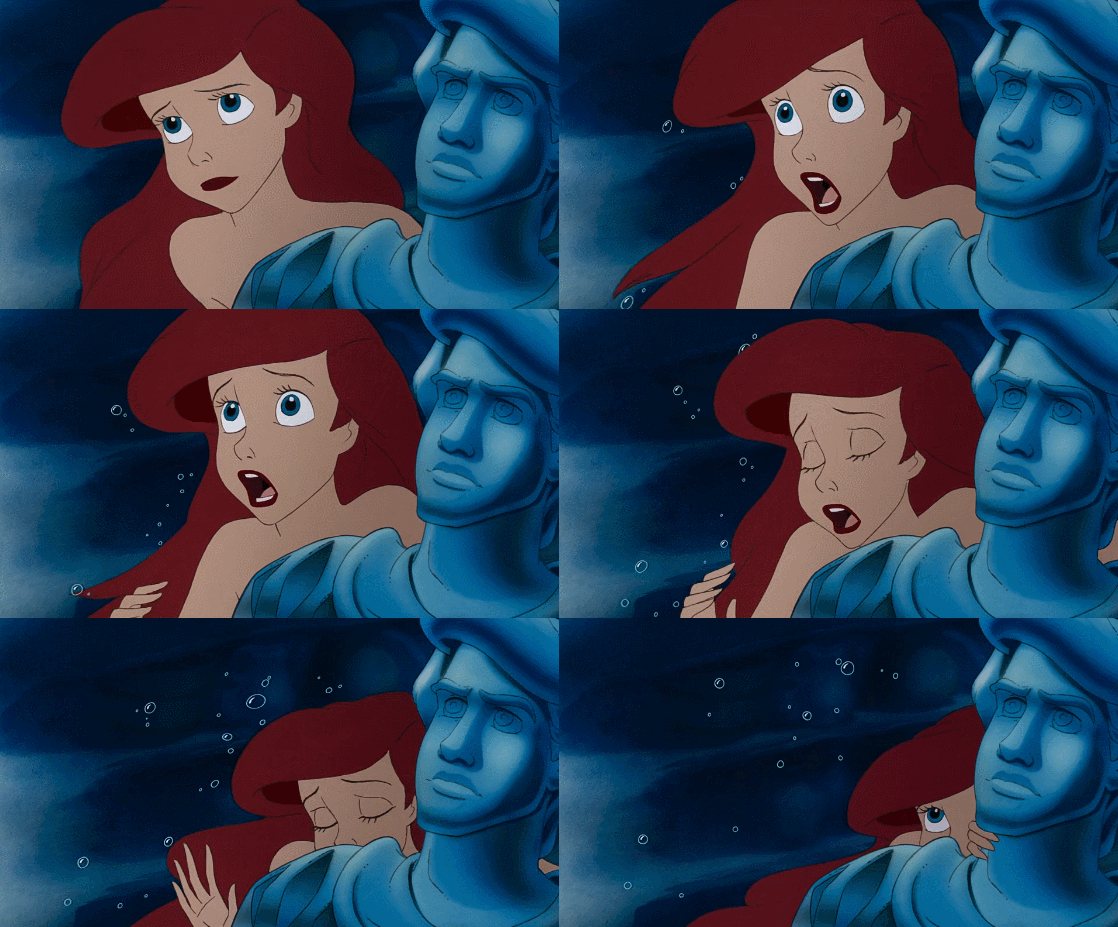
Look at Ariel’s face when she first sees her father in the grotto:
The enhancement of expression in animation allows the audience to clearly see the fear in her face.
Triton has created an environment where his own daughter is afraid of him.
No parent should do that to their child.
Confronting Ariel, Triton says, “I consider myself a reasonable merman. I set certain rules and I expect those rules to be obeyed.”
On one level, Triton is right to expect his children to respect the rules he sets in place.
What I feel Triton misses, however, is that respect is not the same as intimidation.
Since Triton wants Ariel to accept his rules based solely on his authority as her father, he makes it impossible for there to be any communication between himself and his daughter.
This dynamic means that he will not listen to Ariel even when Ariel is in the right and he is not. Children should listen to their parents, but in the same way, parents should listen to their children.
Triton may be in the right to worry about his daughter’s safety, but his fear is still born of bigotry – bigotry that Ariel recognizes and rejects.
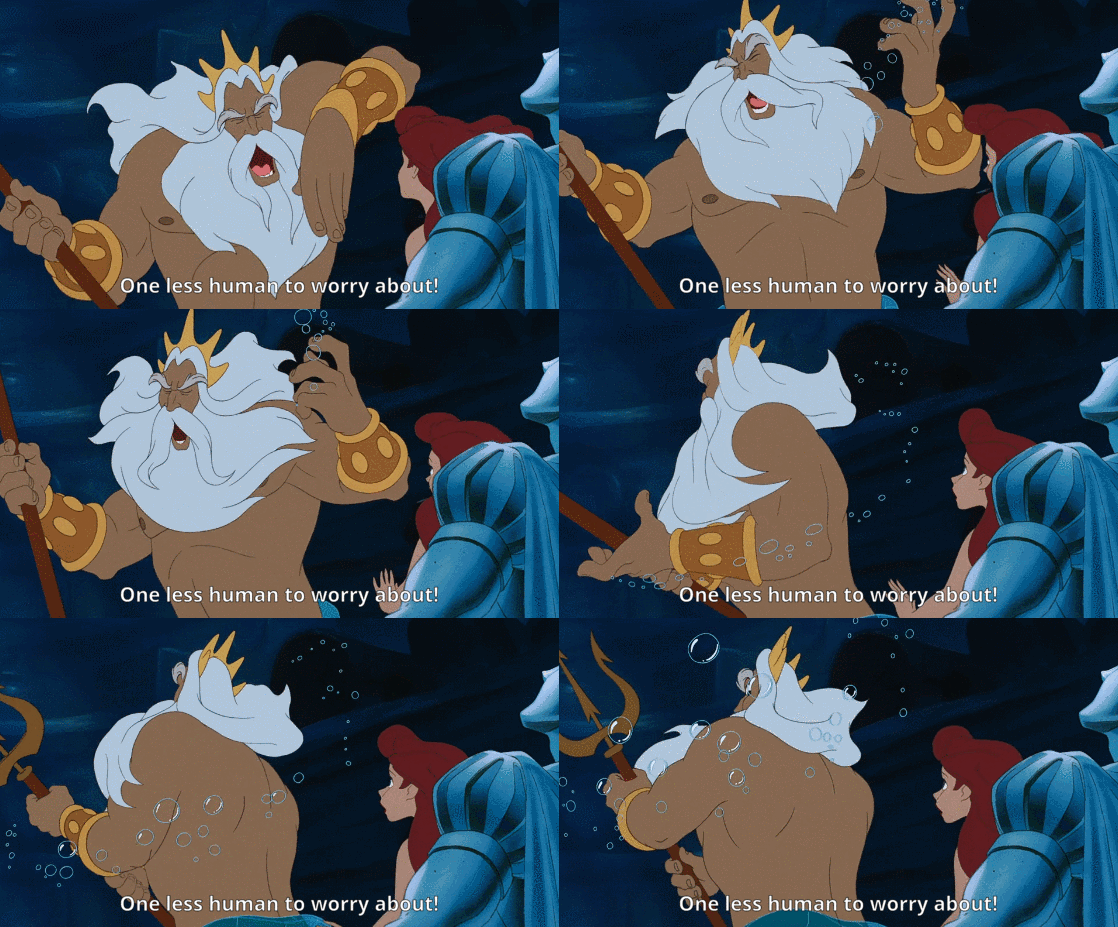
Triton, after all, grows angry at his daughter because she wouldn’t let another living being die. He specifically calls her out because she “rescued a human from drowning.”When Ariel counters that allowing someone helpless to miserably drown is cruel, he shuts her down with:
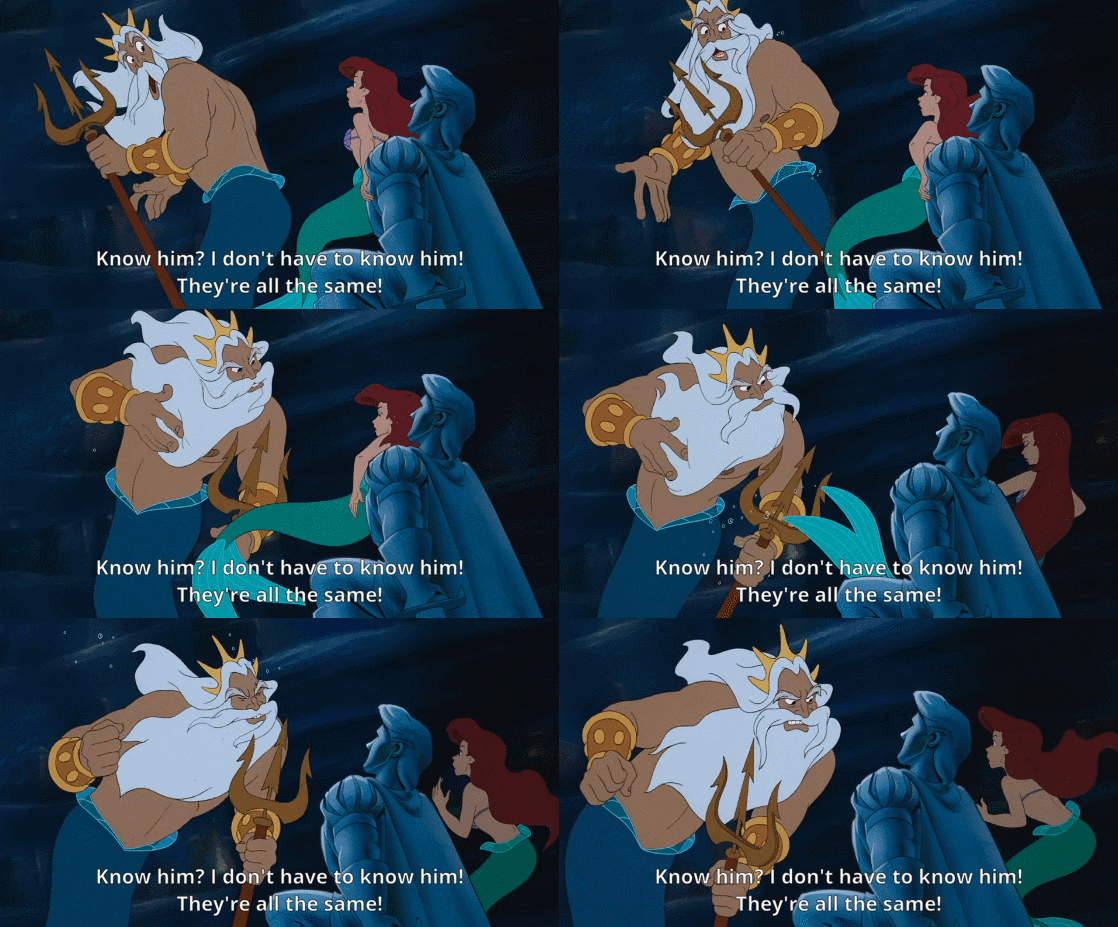
When Ariel points out the illogical nature of her father’s brutal line of thought and says, “You don’t even know him!”, Triton responds:
Even if a viewer is largely sympathetic to Triton, that viewer cannot ignore Triton’s prejudice in this moment.
He generalizes millions of people.
And if the rules he sets down include the tacit understanding, “Let innocents die because, by virtue of their humanity, their lives have no value,” then maybethose rules deserve to be broken.Maybe those rules need to be changed.
Ariel may be a teenager, but she is wiser than her father here.
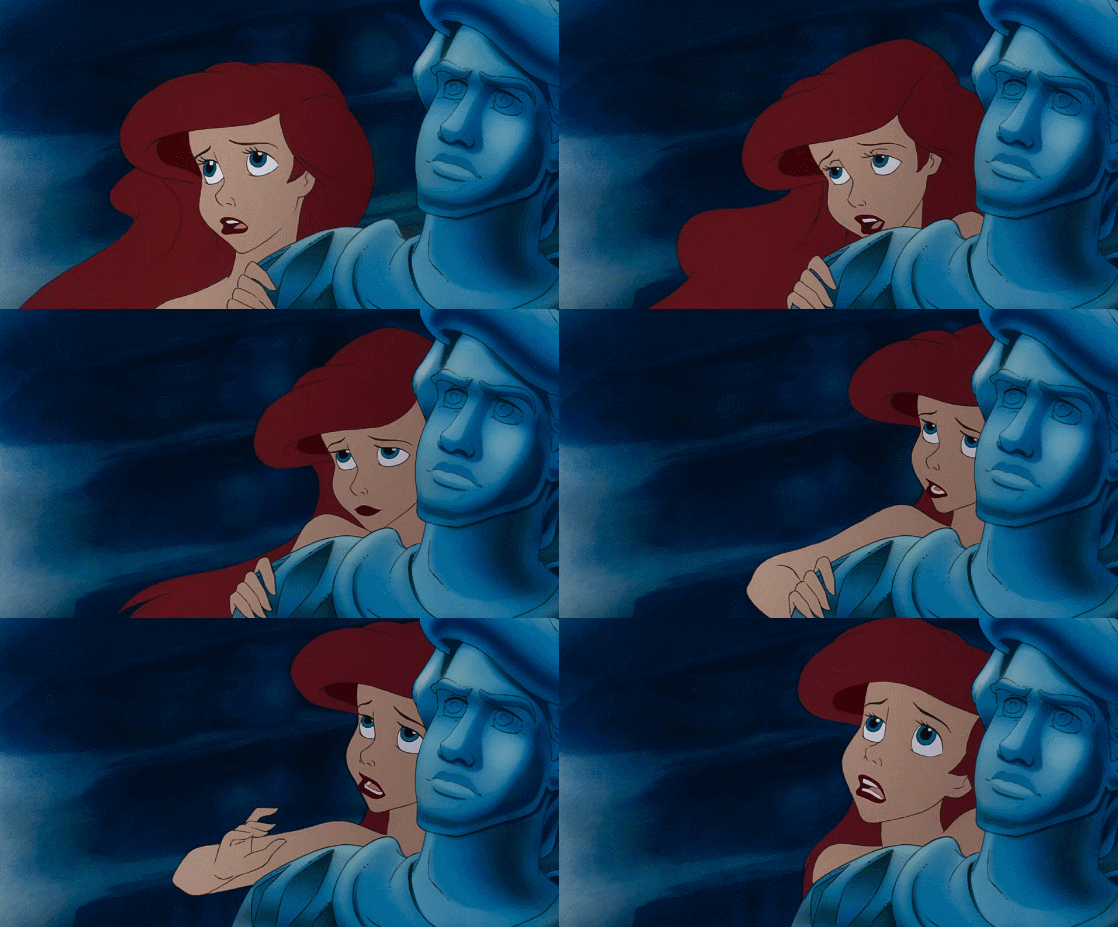
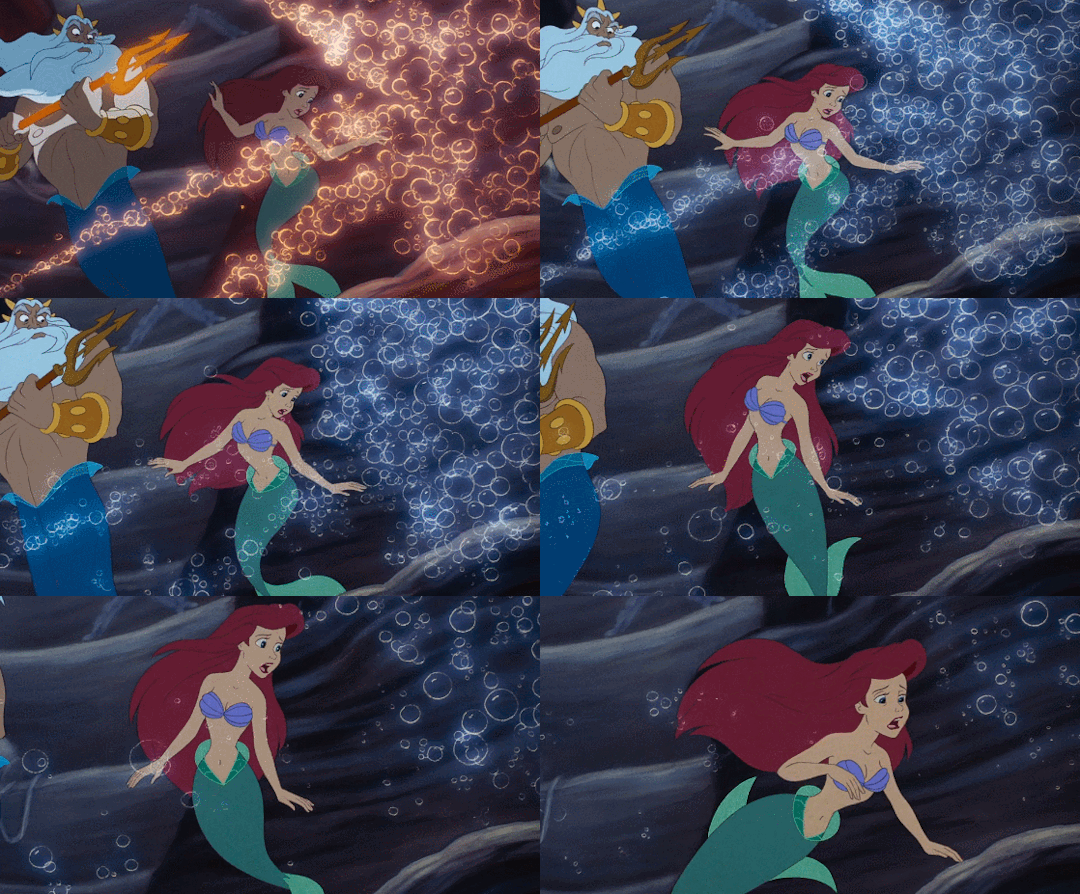
(Also, can I say that Ariel’s body language here breaks my heart every time I see it? She’s swimming away from her father, recoiling…
…until she’s cowering behind Eric’s statue. She looks like she’s about to cry as her father pours forth more vitriol…
…and after she bursts out with the exclamation, “Daddy, I love him!”, she’s terrified that she’s said it.)
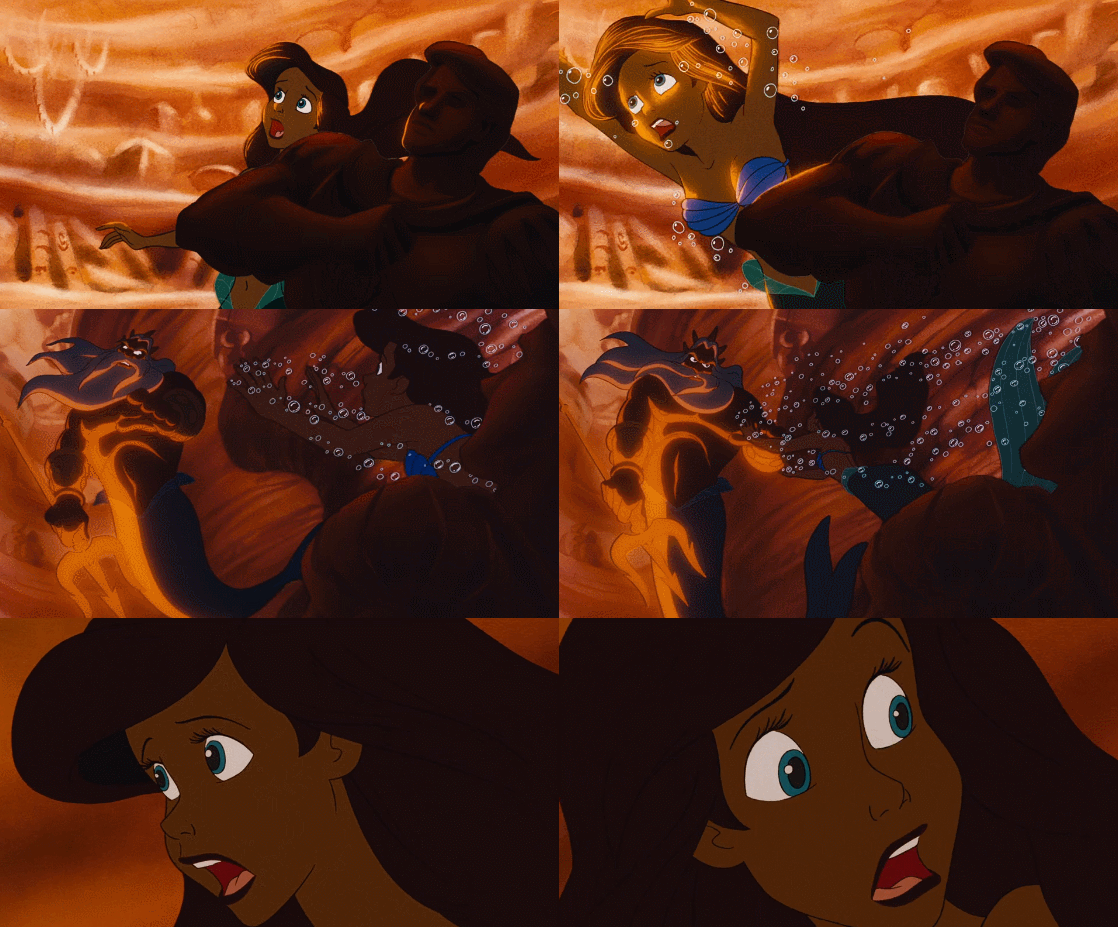
Triton believes that he alone is in the right and destroys the grotto because he feels it is “the only way” to “get through to” his daughter. He believes he must be cruel only to be kind.
Yet, in the end…
…he only succeeds…
…in being cruel.
Triton’s unwillingness to listen to his daughter
– his unwillingness to treat her with the same respect he demands of her –
only widens the gulf between them.
Ariel does not go to the sea-witch because she has been mooning over a man.
Ariel goes to the sea-witch because she has no voice in her own home. Becoming human, she gains the ability to live life on her own terms. Becoming human, she ironically gains the voice she has been denied for so long.
Ariel goes to the sea-witch because her father sends a message to her – a message that she does not matter, that there is no place for someone like her in Atlantica.
Triton may never have meant to send that message, but send it, he did… and he should be held accountable for that.
Indeed, the film does hold him accountable for that.
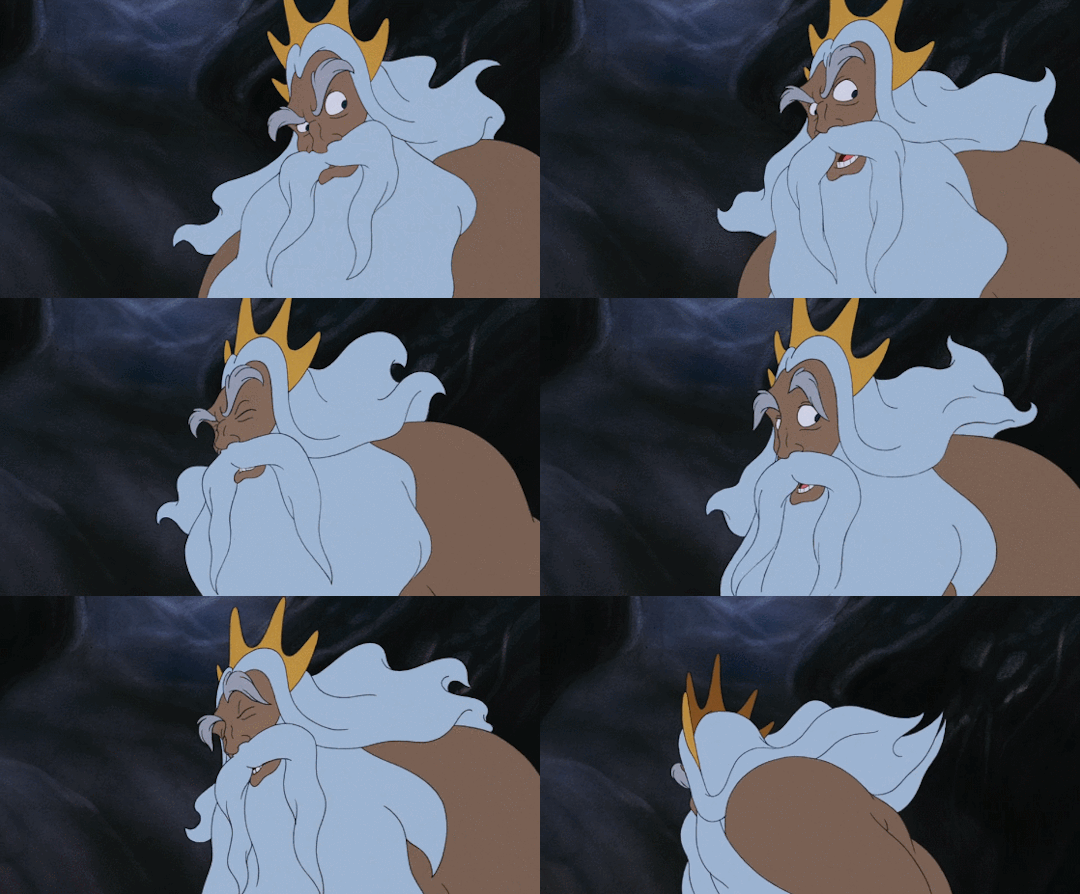
After destroying the grotto, Triton realizes he has done a horrible thing.
Look into his eyes after Ariel falls to weeping:
Look at the regret in his eyes. Look at the remorse. He knows he has gone too far. He never meant to hurt his daughter like this.
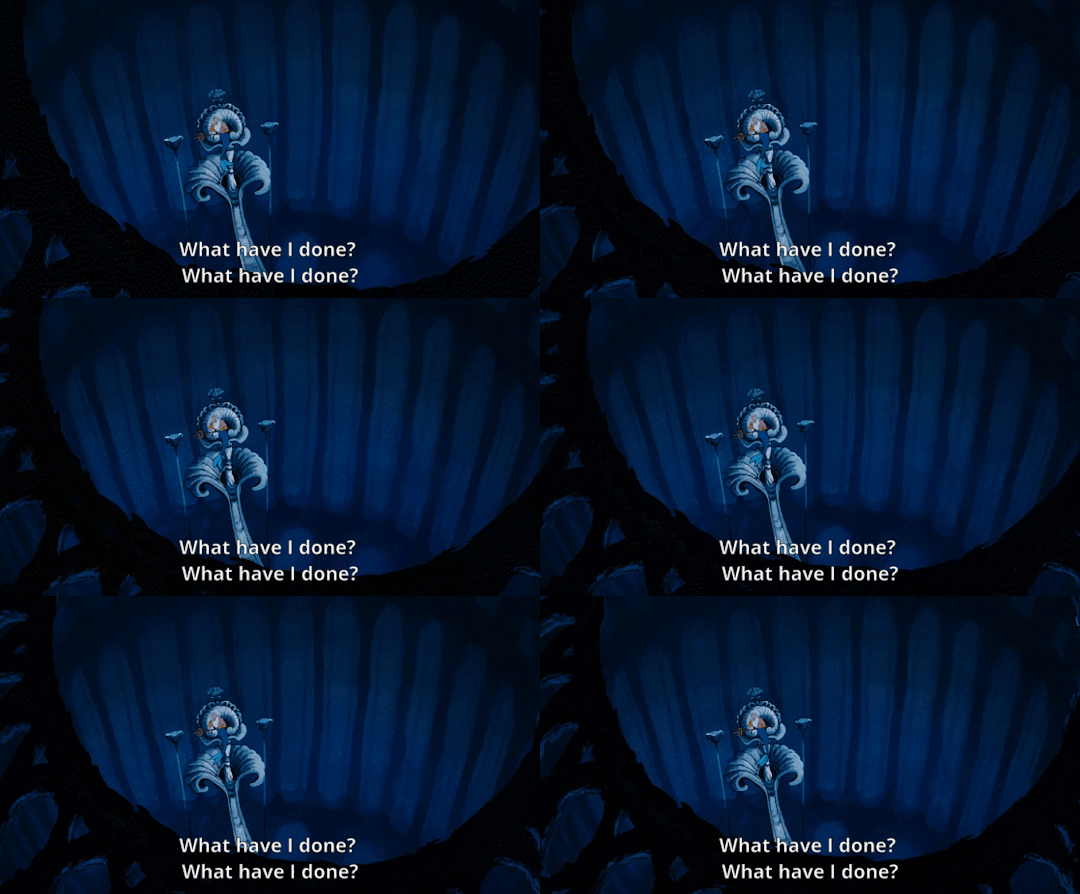
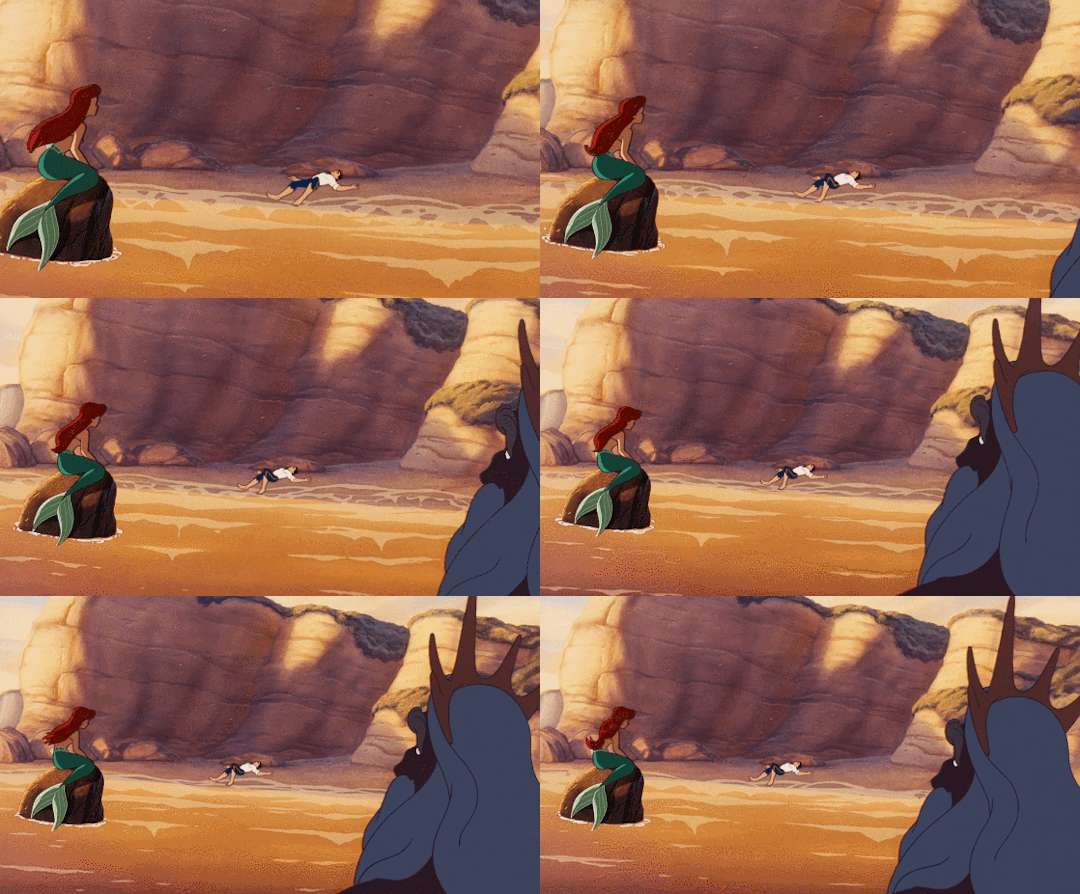
And when Ariel vanishes from Atlantica, Triton takes responsibility for his actions. What does he say when his daughter cannot be found? Does he say, “What folly has my daughter gotten herself into now?”
No. He says:
Simply saying that Ariel ‘gave up [her] voice for a man’ ignores the painful complexity of the situation in which she finds herself. It ignores the depth of her motivation. It ignores Triton’s culpability. It ignores her best character traits and only highlights her flaws (and yes, she has flaws, for she is a multifaceted, well-written character.)
But Ariel’s rejection of prejudice, her ability to see beauty in a group that nearly everyone around her demonizes, her courage and determination and love, are all venerable traits…
…and Ariel’s courage, determination, and love are what inspire Triton to open his heart and change.
Some people say that The Little Mermaid is more Triton’s story than Ariel’s. I disagree and feel that assessment unfairly dismisses Ariel’s emotional journey. Triton has a compelling arc in the film – but that arc is only set in motion because of Ariel’s agency.
He learns from his daughter’s example.
He grows because of her.
Why don’t we talk more about Ariel, the young woman who always challenged her father’s prejudice? Why don’t we talk more about Ariel, who actively spoke out about the flaws she saw in her society? Why don’t we talk more about Ariel, whose actions helped change that society for the better? Why don’t we talk more about Ariel, who formed a bridge between two worlds and enacted positive change?
Why don’t we talk more about that Ariel?
I know Ariel can be impulsive, but she is sixteen years old, and her impulsiveness only makes her character realistic. She makes mistakes but, like her father, she owns up to those mistakes and learns from them:
There are critics of Ariel’s character who want to make the story of The Little Mermaid black and white. Because Triton recognizes Ariel’s impulsiveness, they ignore Triton’s faults and trivialize Ariel.
Yet, the story the film presents is not so black and white. Ariel and Triton are not so one-dimensional.
They both learn from each other and grow together.
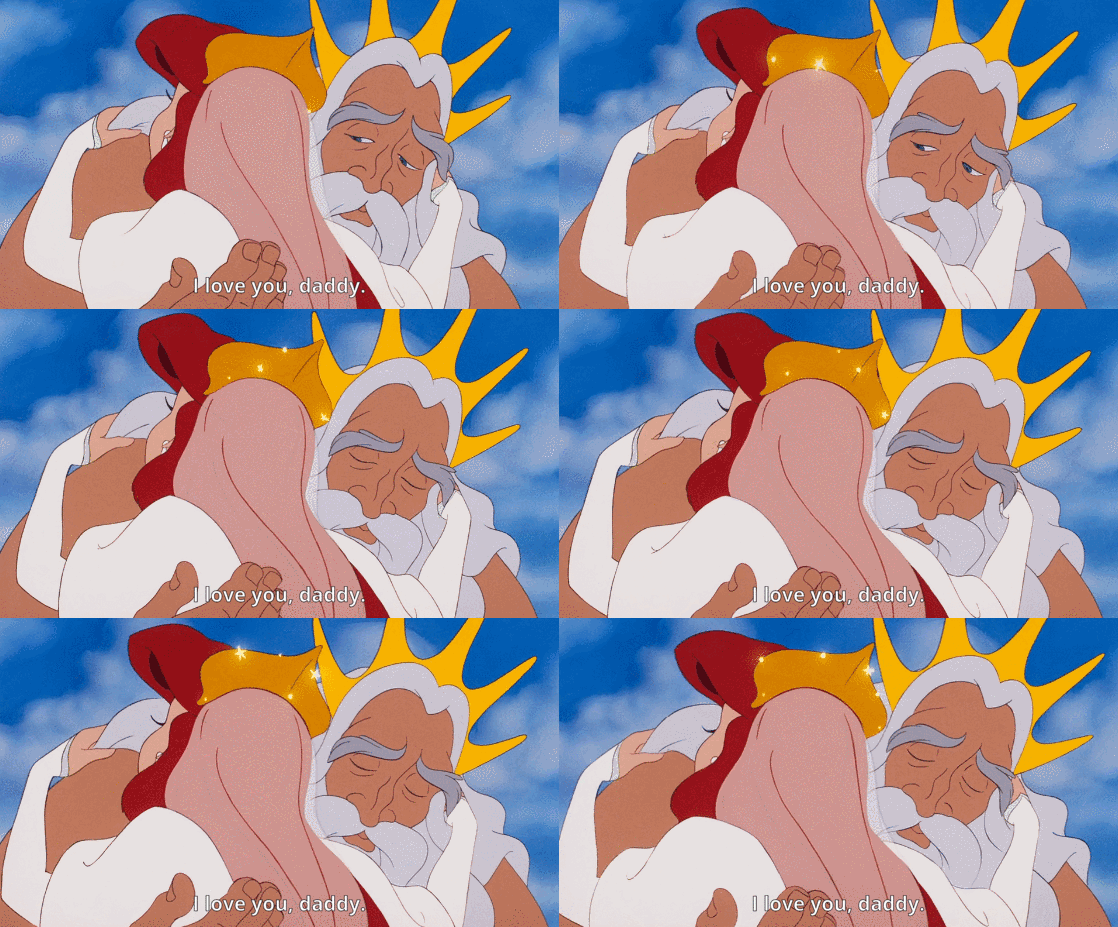
This embrace is so meaningful because, by the end of the film, Triton finally shows Ariel the same respect he asks of her and in so doing, he earns her respect.
Ariel, meanwhile, recognizes her own mistakes and gains a new appreciation for her father.
The Little Mermaid is a beautiful film and Ariel is a brave, inspiring, complex heroine.
I also want to point out, Howard Ashman, a gay man who died of AIDS, was a key creator in this film. He also had a key role in creating Beauty and the Beast. The films we worked on were about outcasts.
@the-blue-fairie thank you so much for putting into words what I felt but couldn’t explain! Ariel has always been my fave princess as well, and as I grow older I’ve come to realize more and more how she will never stop being a great representation of me. Exactly because of all what you wrote above. Thank you. I’m a complete emotional mess but happy, too. ♡
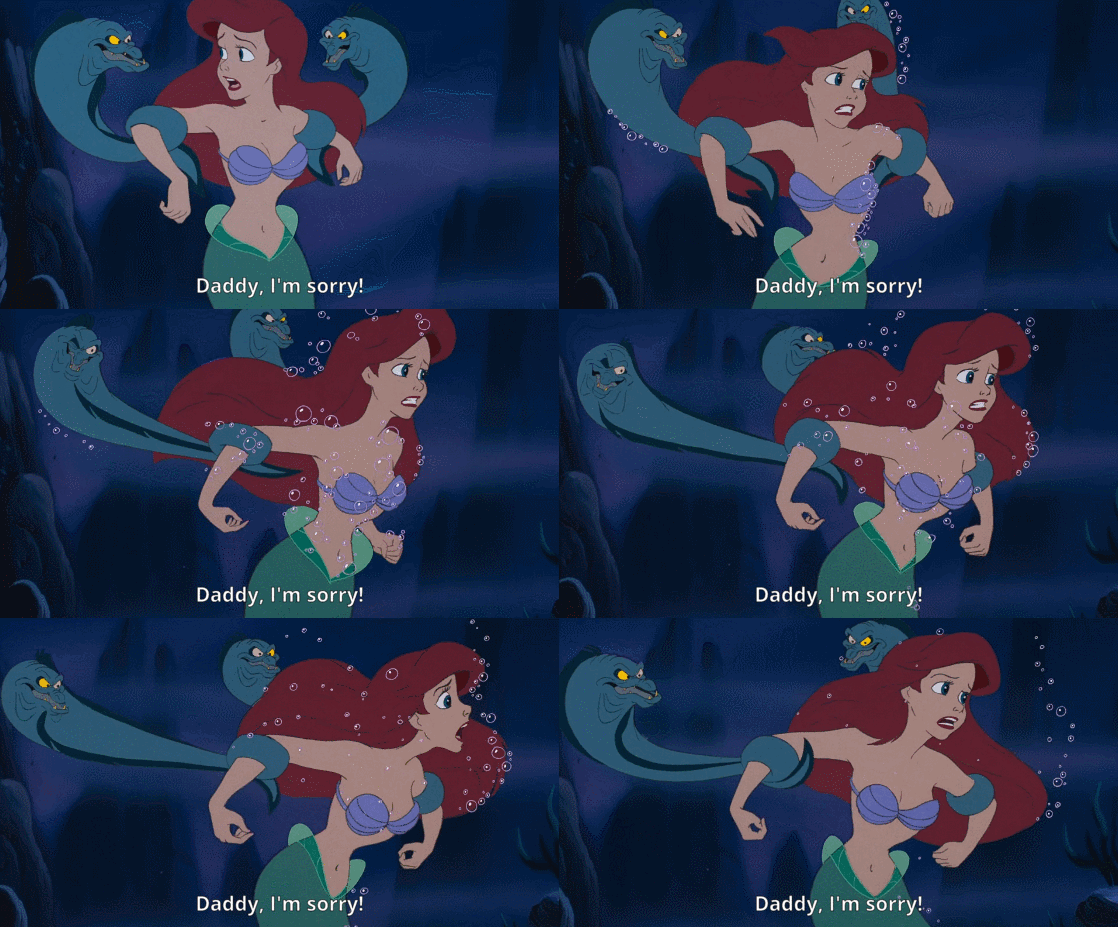
When you’ve been abused by a parent like that dealing with anything afterwords is terrifying.
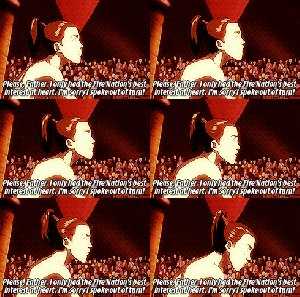
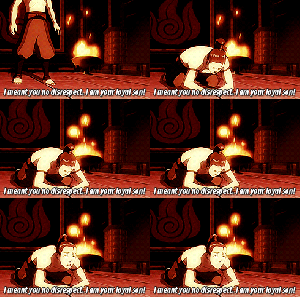
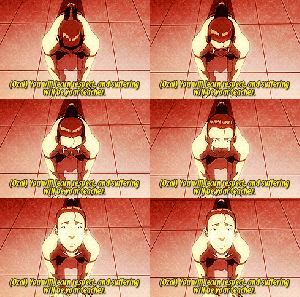
I can only imagine the emotions Zuko was feeling when he apologised to Iroh there.
^This is one of the reasons that I think going in to apologize to Iroh is one of the bravest things that Zuko’s ever done, because of how much it must have terrified him to do so (Iroh would never hurt Zuko like that, but that fear had to have been at the top of Zuko’s mind at this moment)
And why I love Iroh so, so much for being who he is.
He ain’t wearing a jacket no more and he got his sleeves rolled up. My nigga is over it.
Ooh & you can tell he’s ready to curse. Gods above do I miss the Obamas
hes literally in the same boat of assholes as trump yall are blind
Y’all remember when Obama bombed a school bus, a wedding… and thousands of other third world civilians?
“Whattaboutism”, thy name is “these fuckers”.
Jesus Christ.
Can we just admit that all politicians are kinda shady and move the fuck on? Because I preferred Obama to Trump NOT because I thought Obama was a perfect ray of sunshine who could do no wrong, but because he A) knew what he was fucking talking about most of the time, B) He was a diplomat who actually acted… I don’t know… DIPLOMATIC… And C) At least saw me and people like me as fucking human beings.
Did I agree with everything Obama did? Fuck no. Just like I can only HOPE most people right of center don’t agree with everything Trump does. Do not point all your fingers every which way and pretend Trump ISN’T a shitty person, JUST because he isn’t the FIRST shitty person.
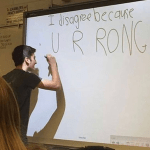
Nah y’all are wrong because you’re using insane ideas from the 50s and a few bigoted doctors to justify hating a wide swath of trans people
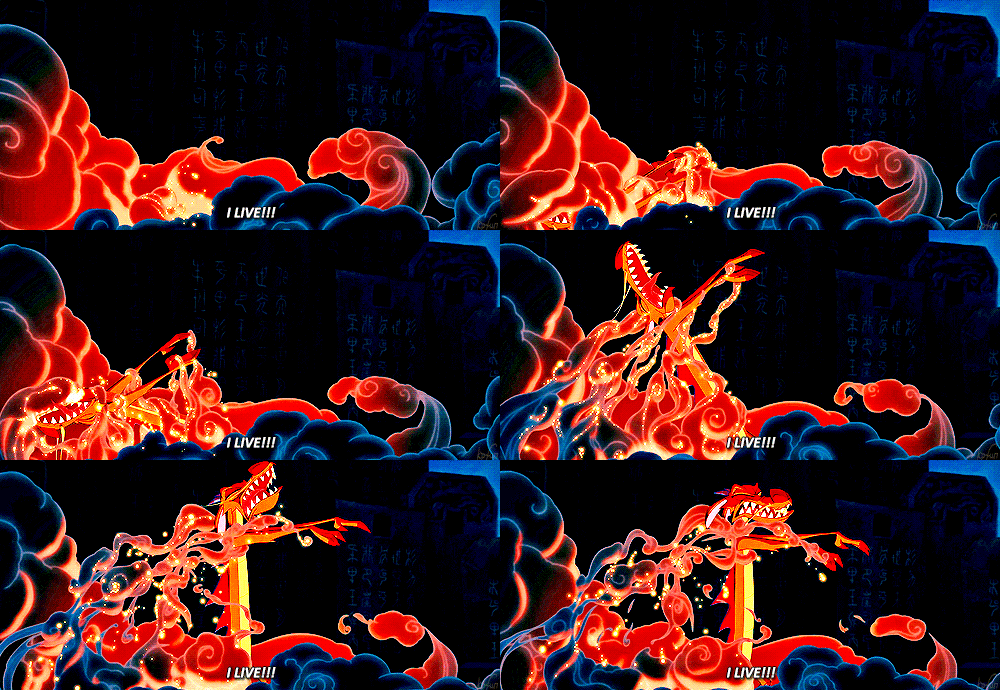
i’m not even making an argument in this post are you seriously responding to the third image (A Meme)…..
but ok! there’s real, scientific evidence that shows there is a biological link to being transgender, rooted in gender dysphoria. this article discusses and cites some useful data, including studies much more recent than the 50′s. here’s a study from this decade that shows there’s a biological basis in being trans. this article cites another study from this decade that shows that brain chemistry displays dysphoria. here’s another article! i can keep providing these, but it comes down to this:
gender dysphoria is an issue in biology, and thus a medical condition. people without dysphoria are shown to be at home in their biological sex and feel no discomfort regarding it. being at home in your biological sex = being cisgender.
nowhere, in all of this, is there any hatred toward trans people. but pop off lol
If you define trans people as people who have dysphoria of fucking course you’re going to find evidence that the trans people you look at have dysphoria lmao
I mean, non-dysphorics have completely taken over the community, don’t need to worry about SRS or HRT and their entire trans experience is based upon gender stereotypes, but let’s pretend their just uwu valid as people who need medical help to look on the mirror without breaking down.
Or if you aren’t able to grow a mo’, you can move instead. Run, walk, jog or skip 60 kilometres to represent the 60 men we lose to suicide each hour. You can go at it solo or with a team.
Maybe you can’t do any of the above, but maybe you do have some money to spare. Donate instead! You can decide whether you donate straight to the Movember Foundation or a specific team or individual.
Mens health is severly ignored and it has deadly consequences. Please take just one moment of your time to help bring awareness to the silent war so many of our fathers, brothers, uncles, grandfathers, nephews, boyfriends, cousins and friends face.
Anyone can participate in No Shave November. You ladies want an excuse not to shave your legs? Fine, go ahead. But don’t forget what we’re here for!
Stand in support and solidarity of the men who need it!
i don’t know if they’ve been raised by their misogynistic fathers
or if they just choose not to stand with feminism and with their own sisters, mothers, aunts because they want to appeal to men or just be not like the other girls
but it’s so ridiculous and upsetting
i just want to know who hurt you tbh
I’d tell you but I have to go to my secret patriarchy meeting that you’re not invited to, sorry.
I have a minor in Women’s Studies. It was getting that minor that led me to leaving the feminist movement.
Can’t really be sure which part made me leave but I had a lot to choose from:
-massive victimization complex and culture
-condescending bullshit (much like OPs)and elitism, usually coming from someone from Western, middle-to-upper class privileged backgrounds
-pretending that inconvenient parts of their history didn’t exist (rampant racism, homophobia, eugenics, ableism, transphobia).
-promotion of history by “scholars” who wanted to provide either scary horror sound-bites (”The Burning Times” “rule of thumb”) or feel-good fake history (the idea of a giant overarching ancient feminist matriarchy where everything was perfect until PATRIARCHY).
-pushing of the “right” literature and the “right” authors
-rampant anti-Christianity, especially against the Catholic Church. All others got a free pass.
-idealization of lesbianism as the epitome of feminism, while simultaneously ignoring actual lesbian issues
-aggressively promoting limitless free sex, even if it meant supporting birth control methods known to be harmful, pretending STDs are minor issues, making up statistics and using figureheads to promote abortion, which is always perfect
– condenscending feminist pseudo-colonialist behavior towards non-Western countries. They are either overly idealized and ignore anything bad coming from them, or passive-aggressively lecture them on “women’s health”, making sure village health centers have plenty of MVAs for abortions and Depo-Provera kits but no mosquito nets to prevent malaria
– Want to have kids? If the anti-child rhetoric doesn’t sway you, Here’s some heavy-handed anti-medical propaganda and promotion of birthing like you’re in the third world, regardless of you or the baby’s ultimate health.
Well, I will take some of that back, there were two classes I took for the minor that were worthwhile.
Women and Minorities in the Media, which focused on actual real-time strategies that people could do to move things forward, encouraging action instead of passive complaining and protesting. Like challenging feminist rhetoric
Medieval Women’s History, where I learned that, for a supposed backwards oh-so-evil Catholic Church that hated all those strong women, they sure produced and revered a lot of strong women that did fantastic things. That class was also a major factor in me leaving Wicca and becoming a Catholic, but that’s another story.
Why do so many feminists, who agree Freud was a sexist psycho, always default to “sorry your daddy oppressed you.”
Fucking really?
My dad, whose mom was a WAC in WWII and came from a family of tough Italian women, taught me how to fish and camp, helped me with my Girl Scout projects, and volunteered for awhile at a domestic abuse shelter helping battered women.
What’s your dad done? Shit, honey, what have YOU done?
it’s people like you why I left the feminist movement. Look in the mirror – there’s the problem. Lies, misdirection, gaslighting, victim-blaming, willful ignorance and absolute refusal to even CONSIDER AND LISTEN to constructive criticism.
That’s pretty much why I left as well. The constant bullying and ostracizing and cultish attitude was just too much. Say the wrong thing and bam, they throw you under the bus and expect you to grovel at their feet for forgiveness, and they won’t give it, but they’ll make you think they will. I saw that too many times and refused to play the game. Glad I ditched them. I don’t need more abuse in my life.
Actually it was feminists, trying to tell me that the men around me are evil. And that I am somehow an eternal victim. Even in the Western Society, in which I have a freedom that women in a large portion of the world only dream of.
Women in days gone by did many wonderful things, for which I will always be thankful to them. Whether they called themselves feminists or not, I neither know or care.
But present day Western feminists do nothing whatsoever to make me want to join them.
And I can love and want to support other women without calling myself a feminist and certainly without hating men.
I wish I could add to this, but my feelings are perfectly summed up already.
And I can love and want to support other women without calling myself a feminist and certainly without hating men.
Exactly. Feminism is not a synonym for women’s rights, supporting women, or rights for all people. I hate when people say “If you support women rights, congratulations you are a feminist” – y’all don’t have a monopoly on human decency (indeed, many actions of the feminist movement suggest the opposite). Feminism has specific beliefs and agendas, and in many ways is a religion. It is not the god I want to worship.
Who hurt me?
My stepmom when I told her that I had a trans girlfriend said that she looked like a man and then proceeded to railroad me on whether I knew her or not, how “comfortable” I would be around her, etc. guilt-tripping me for what seemed like forever to the point where I would rather TELL MY DAD that she’s coming over my house than get involved in another angry screaming guilt trip.
Who hurt me?
My so called “best friend” in college who raped me a week after I came out to her as bisexual and proceeded to subject me to nine months of mental and physical abuse, AND tried to cut everybody out of my life so I would have nothing but her.
The most disturbing part about all this was SHE WAS STRAIGHT. She was so desperate to have someone love her in any way that she was willing to take advantage of peoples weak points and completely destroy them so that they will stay with you.
And when I came to the internet for resources on how to fix my trauma feminists victim blamed me and told me to sympathise with my rapist because “she only did it because of patriarchy.” And told me not to speak about it because it might “offend the real victims of rape”
The “egalitarians” feminists love to paint as misogynistic however were the only ones who felt sympathy for me, and told me rape was rape regardless of gender.















 Site Title